
Crawl space vapor barrier in Topeka KS - a drier crawl space under your floors
Musty smell, damp dirt or cold floors over the crawl space? We deal with the water first, then cover the ground wall to wall.
Get the damp under your house checked
Call (785) 246-7785 and tell us what you're noticing, the smell, the wet dirt or the cold floors, so I know what to look for when I come out.
Do I need a vapor barrier in my crawl space?
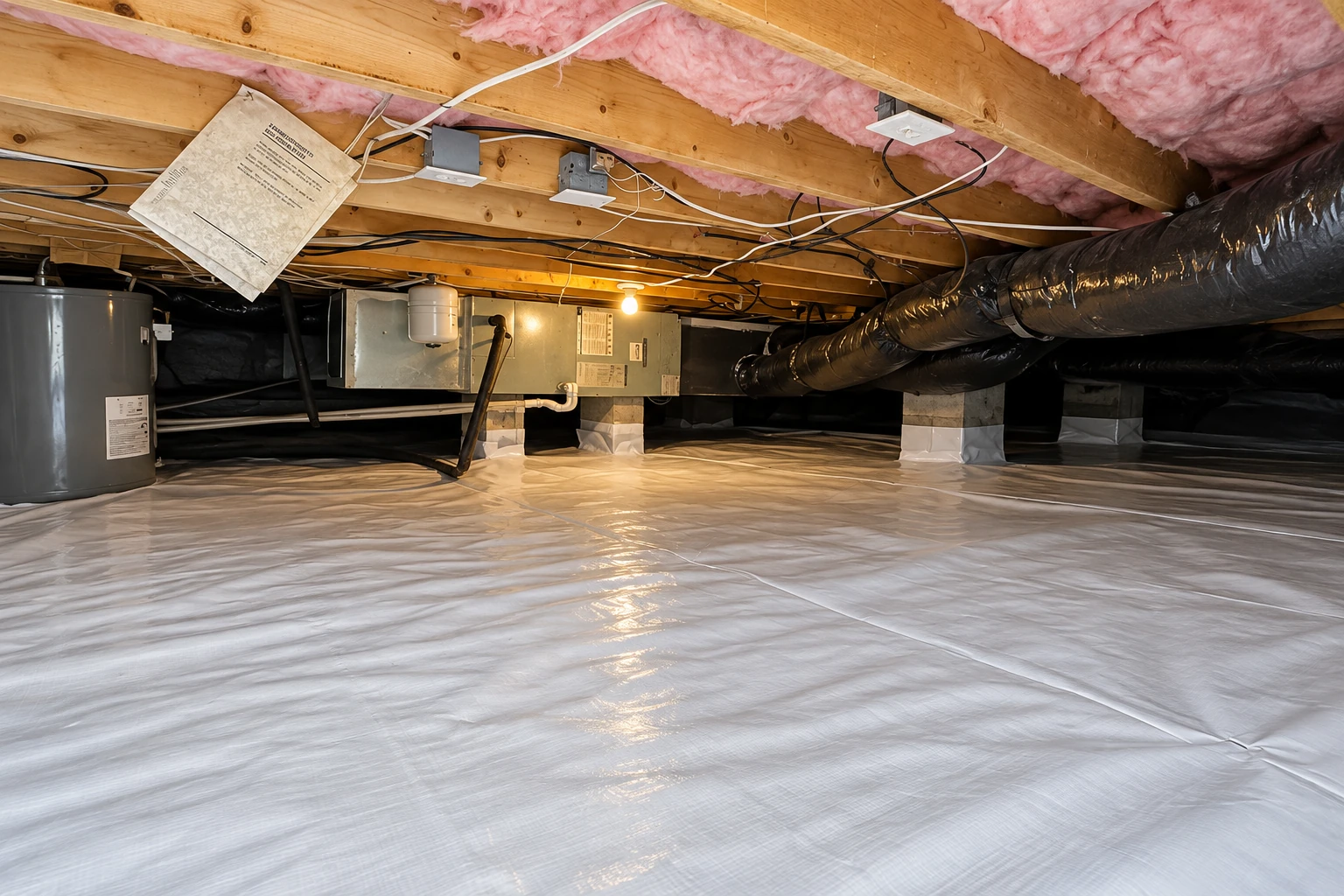
A crawl space vapor barrier in Topeka is a plastic sheet laid over the dirt under your house, and it keeps ground moisture and soil gases from rising into the crawl space and getting pulled up through gaps in your floor.
Most people call because the house smells musty, the floors feel cold or the dirt down there looks wet. The price moves with the size of the floor, how many piers and pipes the plastic has to fit around, how tight the access is, how rough the walls are, and whether water from outside has to be dealt with before any plastic goes down. That last part and clearing out what's stored down there are what usually move the schedule, and I'll point both out when I walk the space with you and explain what I'd do and in what order.
Why Topeka homeowners call us about crawl space barriers
I come out to every job
I look at every crawl space myself before we quote it, and I'm on site for most of the install. The person who explained the plan is there to see it done that way.
In business since 2020
We've been in business since 2020, and I learned insulation from my dad long before that, crawling through attics behind him. He taught me to do things in order, which matters most down here.
Ask any contractor for their license
We're licensed and insured. The city has a residential contractor license for anyone who builds or remodels a one- or two-family home, so it's fair to ask whoever you're comparing about theirs.
On a crawl space, the water comes first and the plastic second, and getting that backward is the usual mistake. Tell us about your crawl space and I'll come have a look.
How we put in a crawl space vapor barrier
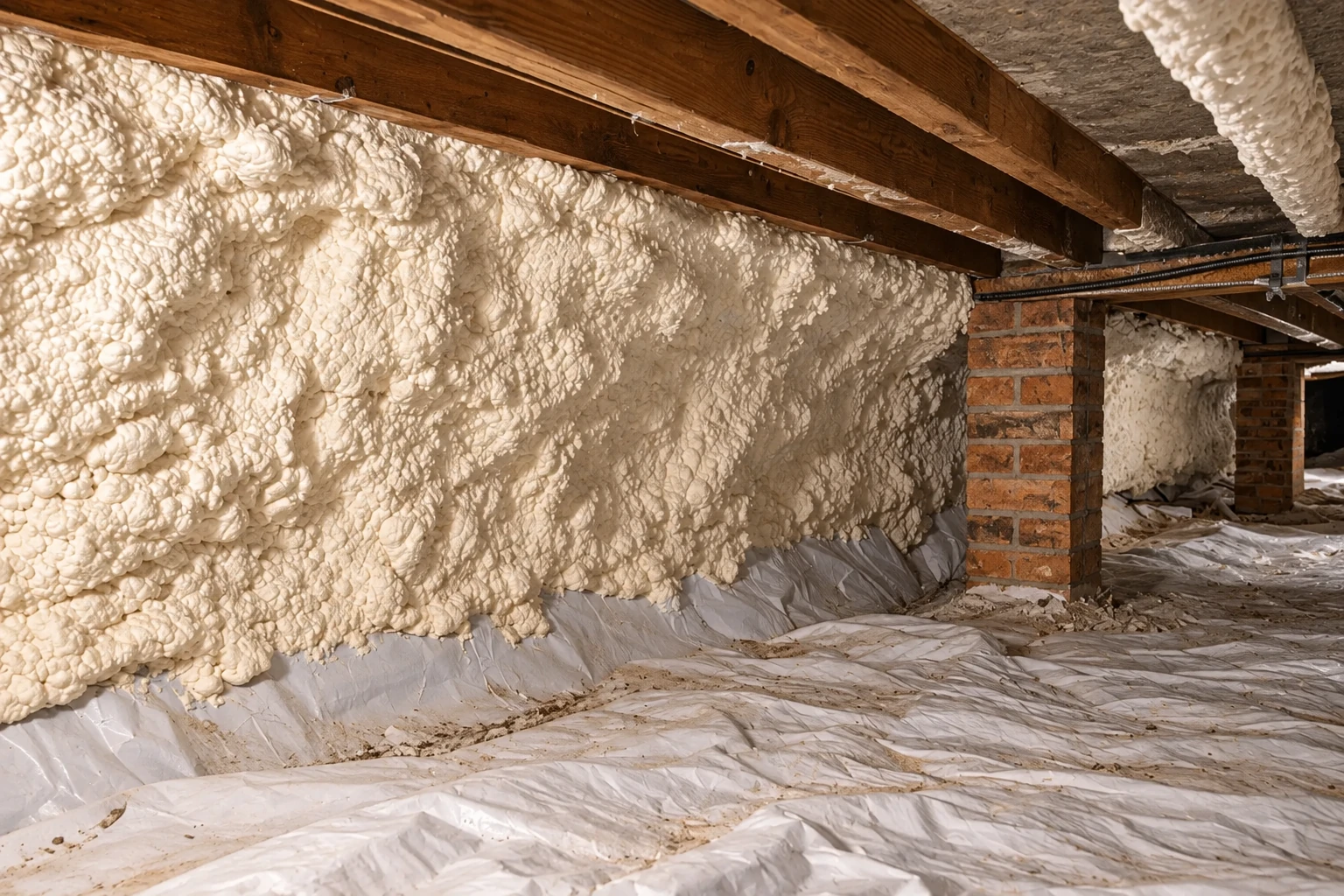
We start by finding where the moisture comes from. If water's getting in from outside, plastic won't fix it, so we look at the grading and drainage around the house first and tell you what needs doing there. Once that's handled, our crew clears the debris, lays the sheet across the whole floor and runs it up the walls and piers, fastened so it stays put. The seams get lapped like shingles on a roof so any water runs off them instead of under, and we lay a heavier runner where someone will crawl to the furnace so the plastic doesn't wear through.
The crawl space is usually only part of the moisture story. If there's a damp wall or slab somewhere else in the house, our vapor barrier installation work covers that too. And since air from below tends to rise through the house and leak out the top, attic air sealing, closing the gaps around lights, pipes and the hatch, takes care of the other end.
Ground cover for a vented crawl space
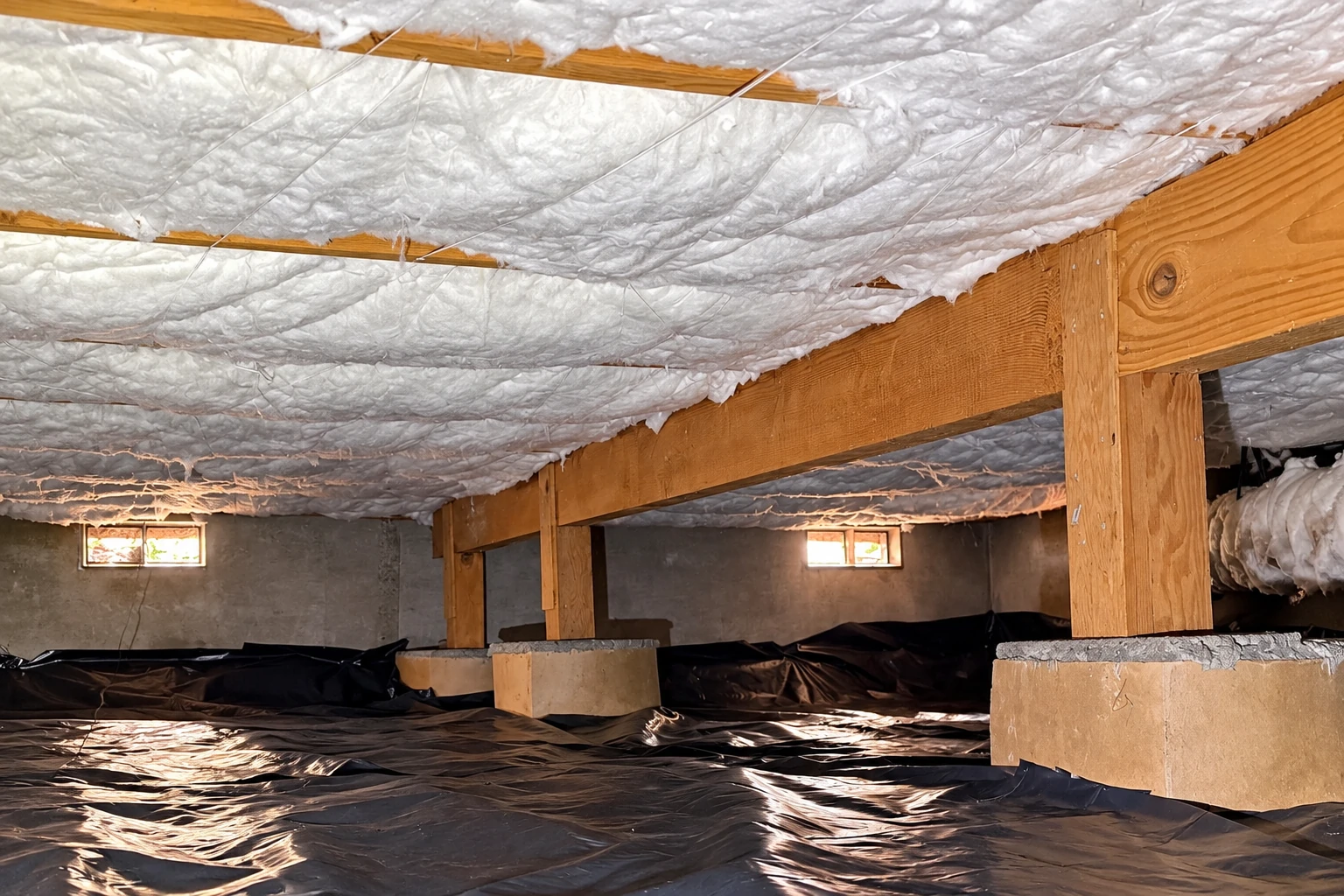
This suits most houses with vents in the foundation walls and nothing much living down there. The plastic covers the dirt and runs up the walls and piers, and the vents stay as they are.
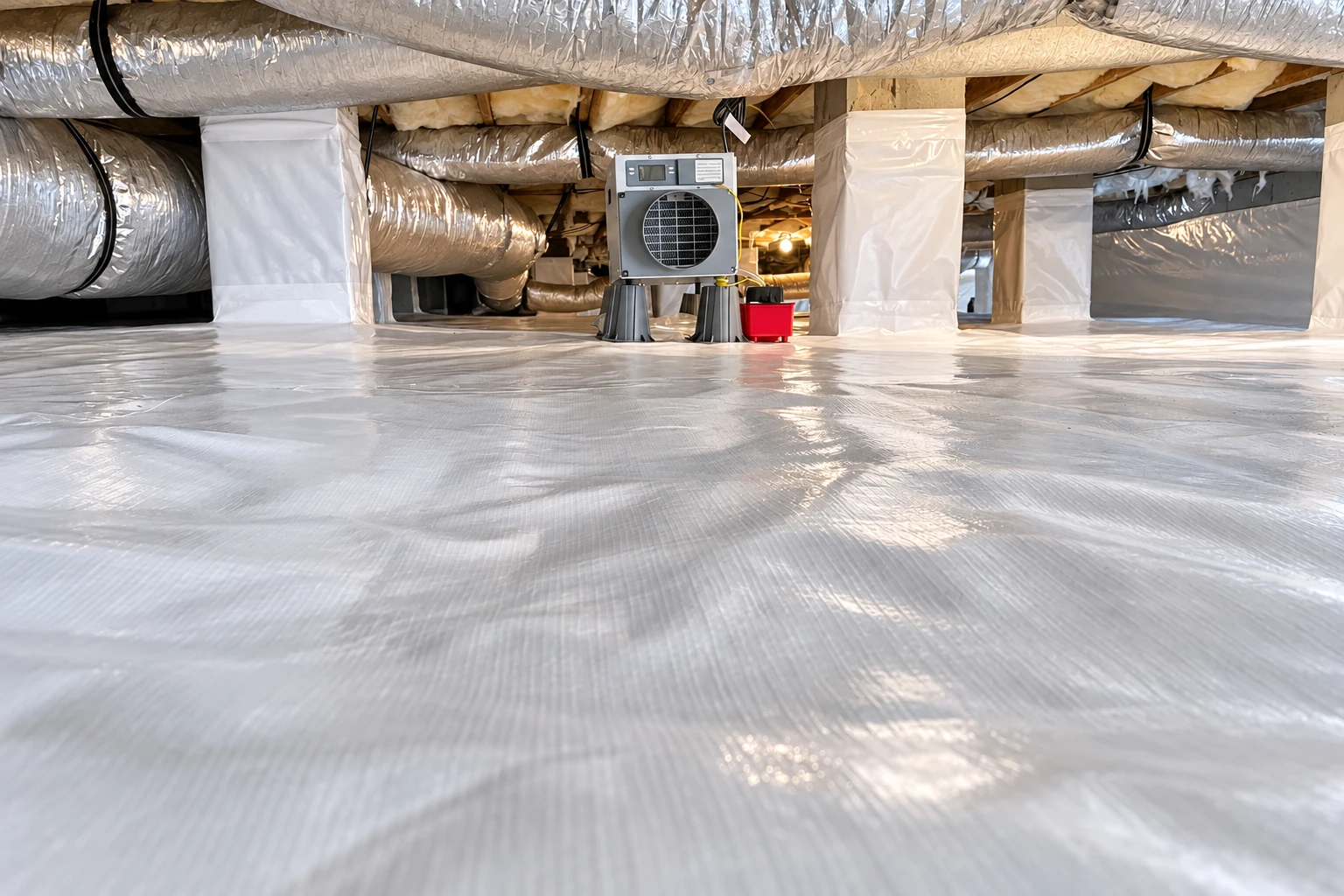
Sealed crawl space with the vents closed
This suits a crawl space that holds ductwork or a furnace, because that air ends up in your rooms. It costs more, it needs a way to dry the air once it's closed off, and uneven walls, lots of piers or tight access make a good seal harder.
How do you know your crawl space needs a barrier?
Musty smell in the house
A stale, earthy smell on the first floor usually means damp air from the crawl space is working its way up. The longer it goes, the more moisture the wood and insulation soak up.
Dirt that stays wet
If the dirt under your house looks damp or stays dark all year, the ground is feeding moisture into the space, and the joists sitting over it start to stain and soften.
Puddles after a hard rain
Water standing in the crawl space after storms usually comes from outside, not up through the dirt. Plastic laid over a puddle just hides it, so the source needs looking at first.
Torn or bunched-up plastic
Old plastic that's ripped, pulled loose or only covers part of the floor lets ground moisture through every gap, so you've got a barrier on paper and damp air in practice.
What happens after you call about your crawl space
Call or send the form
Call (785) 246-7785 or use the form, and I'll come out, look at the crawl space and the ground outside, and tell you what has to be fixed first.
Our crew does the work
If you go ahead, our crew lays the barrier once any outside water problem is sorted. Clear stored things out beforehand so the plastic can cover the whole floor.
Clean up and walk through
We clean up after ourselves and go over the finished job with you, so you can see where the plastic runs up the walls and how the seams overlap.
Crawl space barrier questions we hear
These are the questions Topeka homeowners ask most about crawl space plastic. If yours isn't here, ask it when I come out and I'll answer it standing at the hatch.
Does a vented crawl space need a vapor barrier?
Yes, the plastic ground cover should go down whether your crawl space is vented or not. Vents move air around, but they don't stop moisture coming up out of the dirt, and the plastic does.
How thick should a crawl space vapor barrier be?
One trade magazine's guidance is at least 6 mil, and twice that or thicker is even better. Thicker plastic also holds up better under knees and tools, so when you compare quotes, ask each contractor what thickness they're using.
How much does a crawl space vapor barrier cost in Topeka?
Installing a vapor barrier in a crawl space usually costs about $1,200 to $4,000 per job across the US, which is the national range and not our price. Where your job falls depends on your crawl space, and I'll show you what it needs and in what order when I come out.
Will a crawl space vapor barrier fix radon?
No, a barrier on its own isn't a radon fix. The Kansas Radon Program passes along the EPA's advice against sealing alone, because sealing by itself hasn't been shown to lower radon much or consistently. We put the barrier in to control moisture, so if radon worries you, plan for more than plastic and pick up a test kit at your county extension office.
How do I find out if I need a permit for a crawl space vapor barrier in Topeka?
Ask the city's permit office, which issues building permits for one- and two-family homes in Topeka. We check with the local building office on each job and handle any permit it calls for.
What causes water in a crawl space?
In a vented crawl space, standing water usually comes from outside the house. Poor grading, no drainage around the foundation and sprinklers soaking the ground by the walls are the common culprits, and those are worth fixing before or along with the plastic, since a ground cover can't stop water running in.
Get your crawl space looked at
Tell us whether your crawl space has vents and what's stored down there, and we'll reply within one business day. Then I come out for a free on-site estimate, with no obligation, and show you what I'd do first.
Crawl space barrier work
Other work that pairs with this
Vapor barrier installation
For damp basement walls, slabs or other spots in the house where moisture is coming through and the crawl space isn't the only problem.
Learn moreAttic air sealing
Closes the leaks at the top of the house, so the air you've just dried out downstairs isn't escaping through the attic.
Learn more