
Commercial insulation in Topeka KS - walls and metal buildings done in the right order
Sweating metal roof, drafty office or a power bill that keeps climbing? We insulate commercial buildings so they hold heat and stay dry.
Get your commercial building looked at
Our hours run until 10 PM on weeknights and 9 PM on weekends, so call (785) 246-7785 or send the form after your own workday ends.
What does commercial insulation involve for a Topeka building?
Commercial insulation in Topeka covers the walls, roof and frame of shops, offices and metal buildings. Done right, it often includes a continuous layer across the walls that stops heat from slipping out through the framing, which helps the whole building hold its temperature.
Most calls start with a sweating metal roof, a drafty front office or a power bill nobody can explain. The price moves with how much wall and roof there is, whether the building is framed or metal, which material goes in and what has to come out first. The schedule turns on permits, any approval the building's maker has to give and whether you keep the doors open while we work. Topeka's code official issues permits, if required, for anyone altering or improving a commercial building, so we check with the building office on each job and handle any permit it calls for. When I walk the space with you, I'll explain what I'd do and in what order.
Why Topeka building owners call Efficient Topeka Insulation Company
I walk every building myself
I come out to look at each job myself, and I'm on site for most of the install our crew does. The person who planned your walls is usually the one watching them go in.
Based in Topeka since 2020
We've been in business since 2020, and I learned the trade crawling through attics with my dad long before that. We're based in Topeka and also work in Lawrence, Tonganoxie, Eudora and other cities around it.
Licensed and insured for your site
We're licensed and insured. On a commercial job that means a crew working over your desks, shelves or equipment is our risk to carry, not yours.
On a commercial building, getting the moisture plan right matters more than how thick the insulation is. Tell us about your building and I'll come take a look.
How we handle commercial insulation
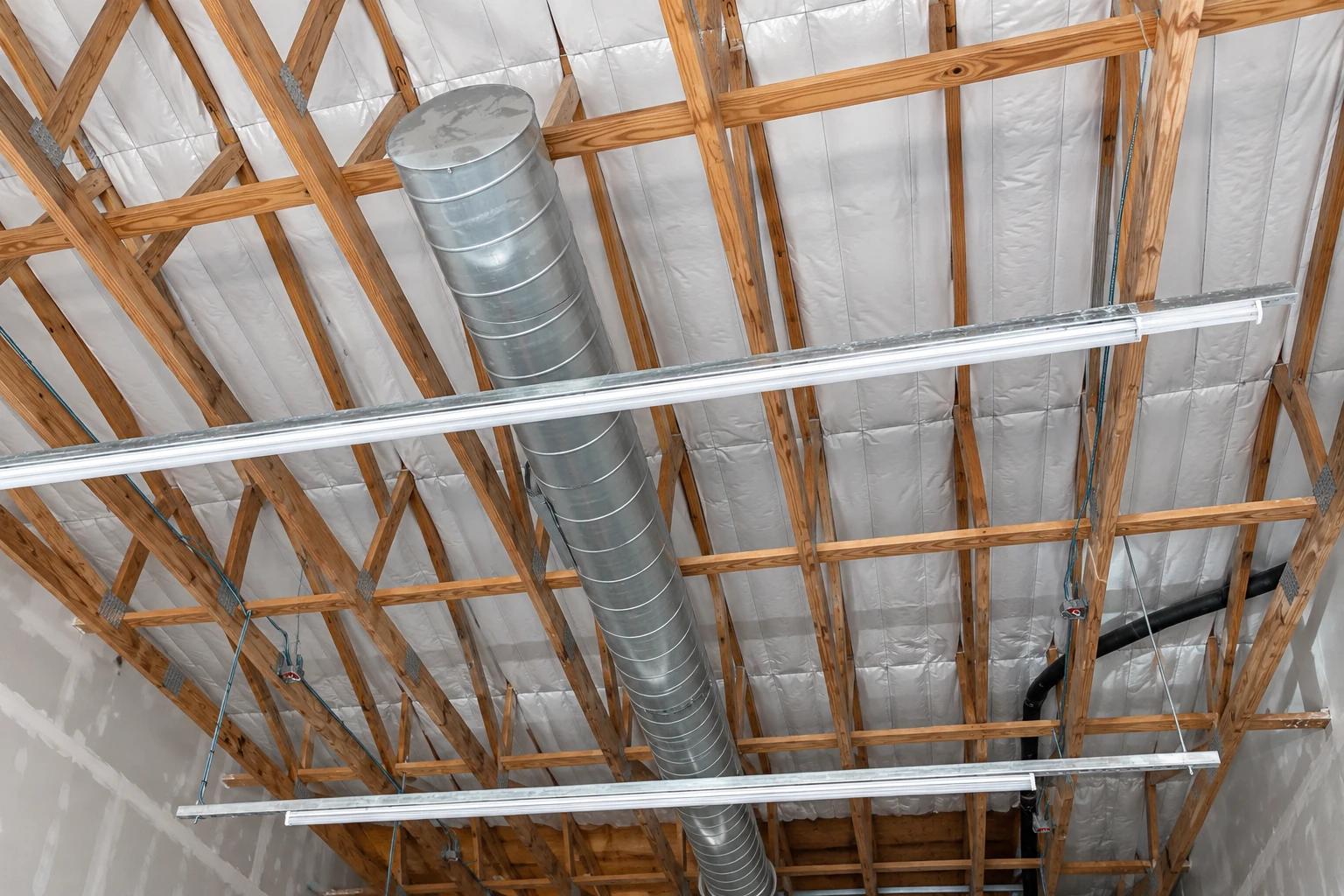
We start with what the building is, framed walls or a metal building, and where moisture wants to go in it, because insulation in the wrong spot just gives water a place to hide. That decides the material and where it goes. Then we seal the gaps and insulate after, since my dad was right that insulation over a leak is just a nicer looking leak. On a metal building, adding a liner means thinking about the structure first, so if our plan attaches anything differently than the maker's detail, we get the metal building maker's okay before we change it.
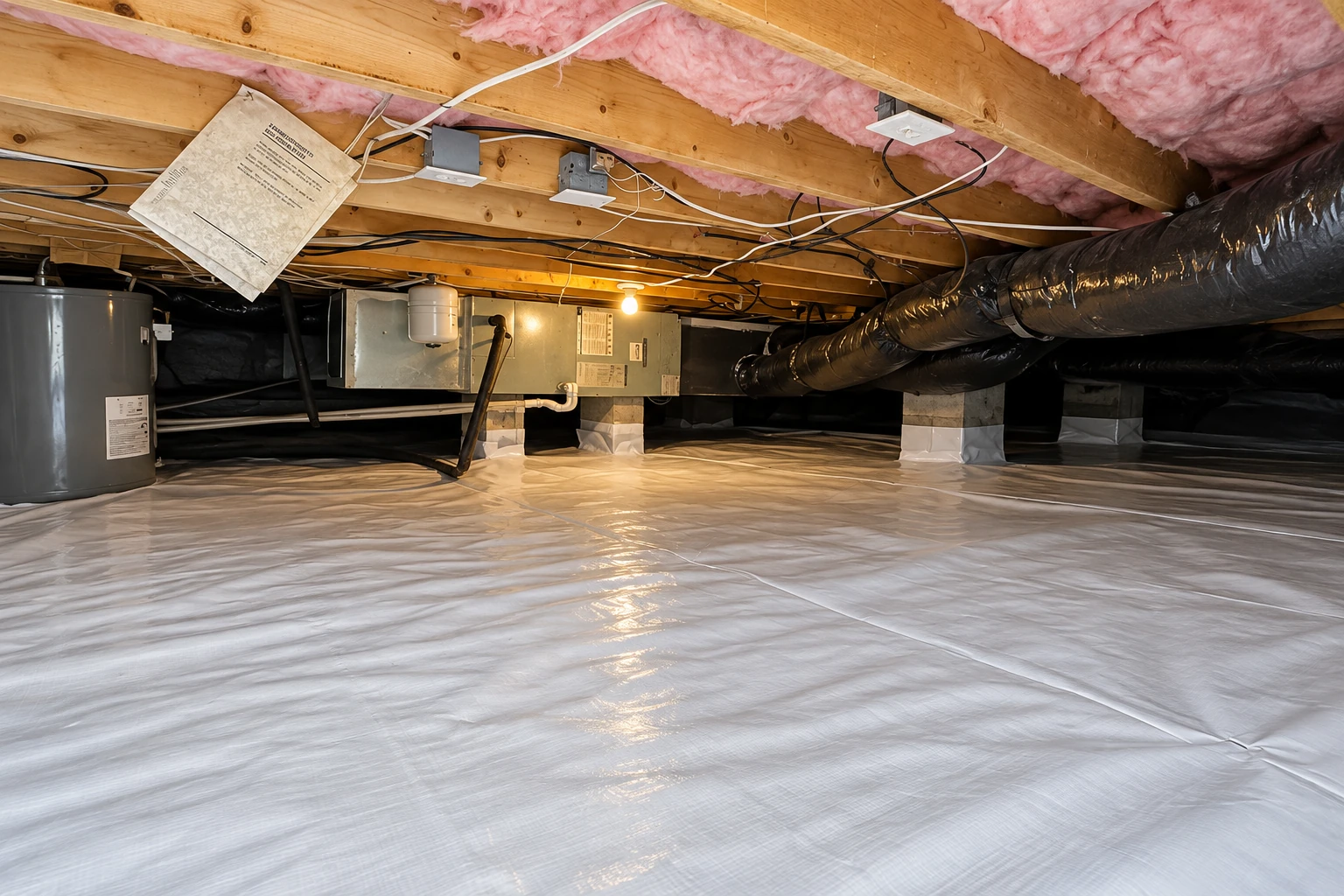
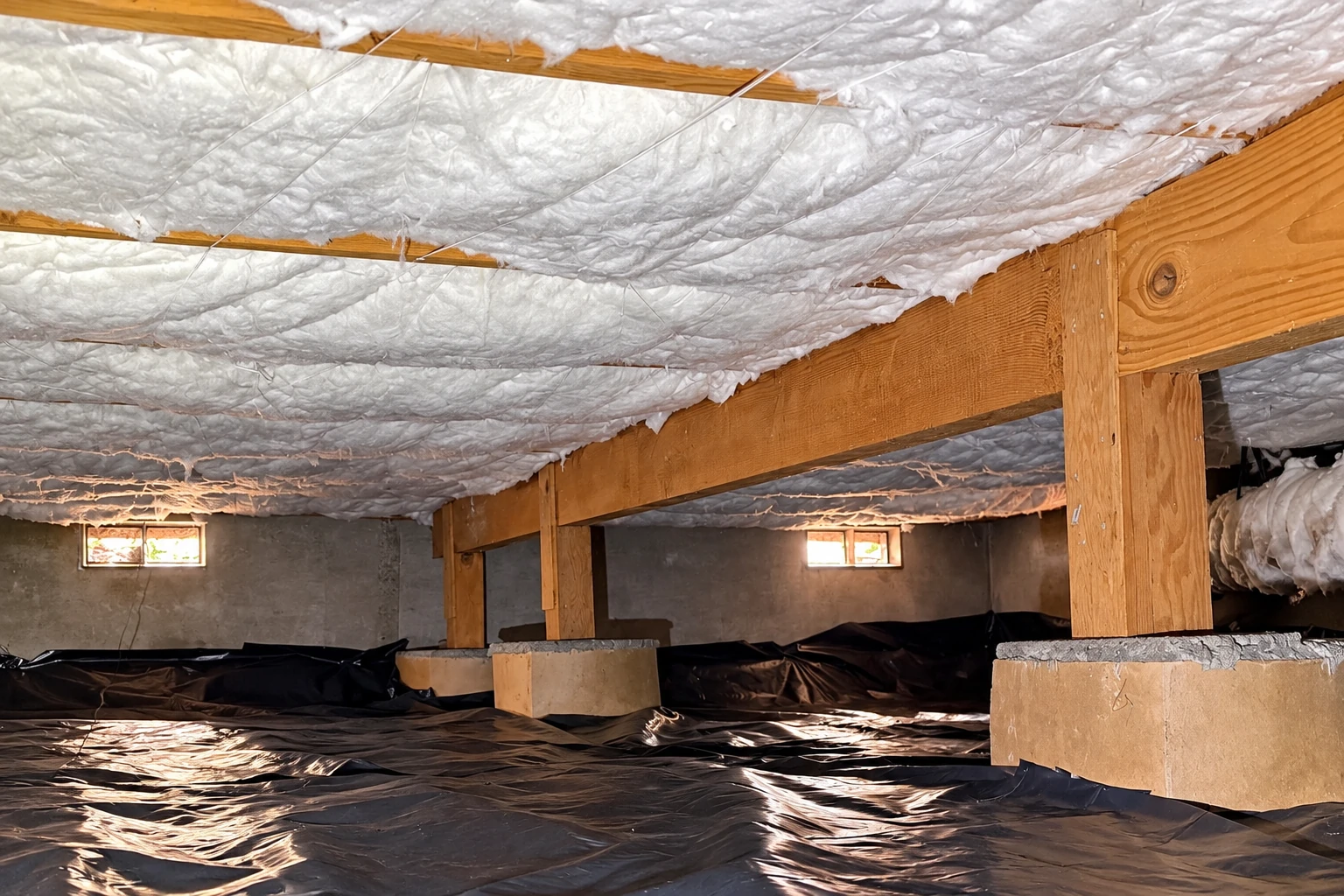
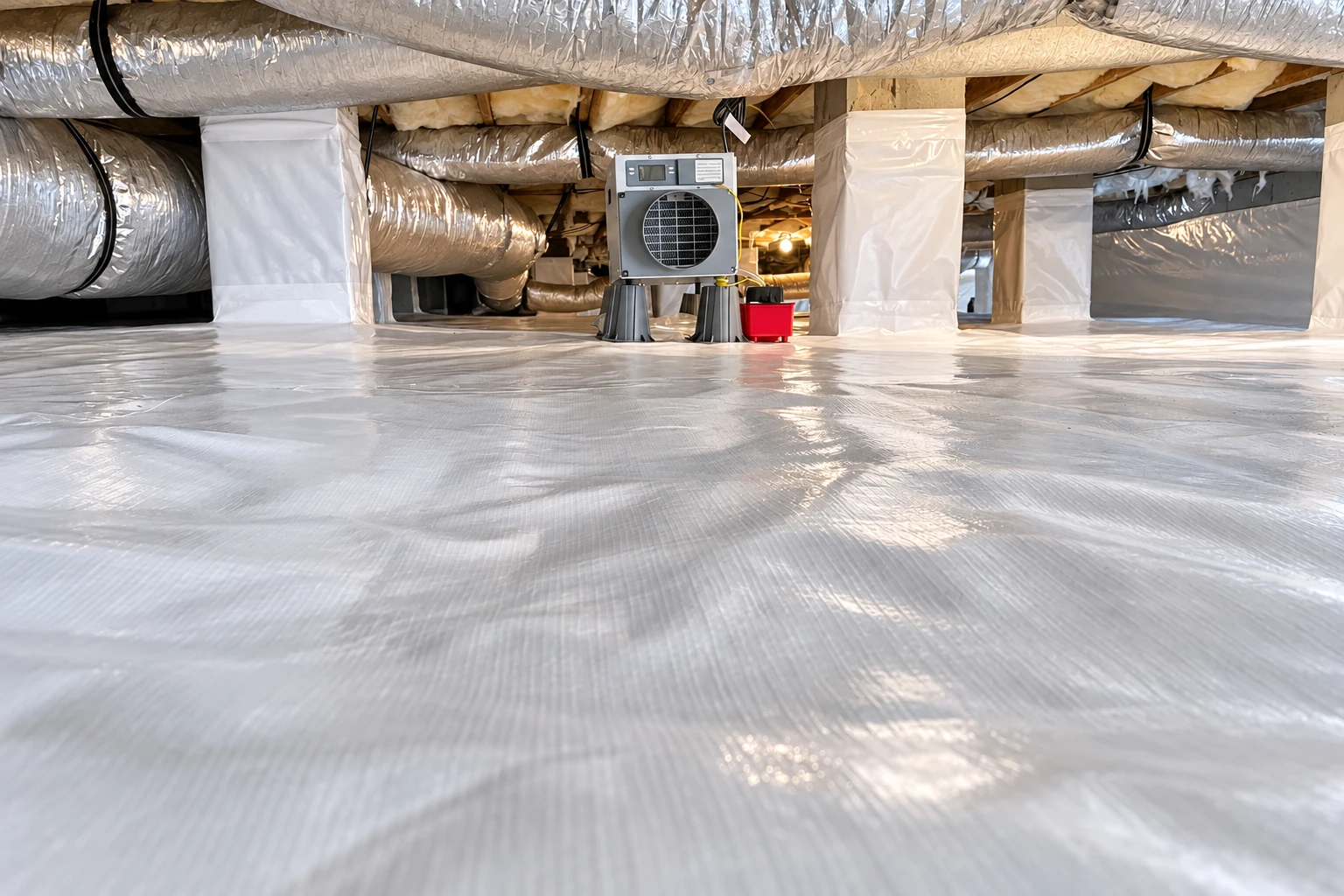
Moisture is half of this work. When a wall or roof needs a layer to slow damp air, we handle the vapor barrier installation as part of the same job. If the building sits over a crawl space, a crawl space vapor barrier keeps ground moisture from working up into the floor and the walls we just insulated.
Continuous insulation for framed walls
This suits offices, shops and storefronts with stud walls, because one unbroken layer stops heat from running through the framing. It's the better pick when the siding or interior finish is coming off anyway.
Liner systems for metal buildings
This suits an existing metal building where the skin is staying on, because the insulation goes in from the inside. We plan the attachment around the maker's detail so the frame isn't asked to carry something it wasn't built for.
How do you know a commercial building needs insulation work?
Water dripping from the roof
Drops falling from a metal roof on cold mornings usually mean warm, damp inside air is hitting bare or torn insulation. Left alone, it rusts fasteners and soaks whatever sits underneath.
Torn or sagging facing
Facing that hangs loose or has holes lets moist air reach the cold metal behind it. The longer it stays open, the more the insulation packs down and stops doing its job.
Stripes on the walls
Dark lines or cold strips where the studs sit mean heat is running straight through the framing. That leak only grows on the power bill, and paint won't fix it.
Drafty office, hot shop floor
A drafty front office in winter and a shop floor that bakes in July usually mean air is moving through gaps nobody sealed. Waiting just means paying to heat and cool the parking lot.
What happens after you call about a commercial building?
Call us or send the form
I come out myself, look at the walls, roof or frame, and tell you what I'd do, in what order, and what has to be fixed first.
Our crew does the install
Our crew does the work, and I'm on site for most of it, so what goes in matches what we talked through at the estimate.
We clean up and walk it
When the work's done, we clean up and walk the building with you, so you see every wall and ceiling we touched before we pack up.
Commercial insulation questions we hear
These are the questions Topeka property managers and business owners ask most. If your building doesn't fit neatly into one of them, call and ask about yours.
What is the best way to insulate a commercial wall, inside or outside?
Continuous insulation can go on either the inside or the outside of a wall, as long as the code's moisture control rules for that wall are followed. So the right side for your building comes down to how moisture moves through it. If you're collecting bids, ask each one whether the joints will be taped or sealed, because sealed joints keep air from moving through the wall and cut heat loss further.
How is a metal building usually insulated?
Most metal buildings are insulated with glass fiber rolls faced with a vapor retarder, a layer that slows moisture, draped over the frame before the metal skin goes on. The vapor retarder side faces the inside, and the skin closes in both the insulation and the frame. On a building that's already standing, insulation usually goes in as a liner, which is where the maker's approval comes in.
How do I know if my commercial building needs a vapor barrier?
In many cases no vapor retarder is required at all, and when one is, the class you need depends partly on the building's cladding. If faced insulation goes in, either the inside or the outside facing should be perforated so the wall doesn't end up with two vapor retarders. Which side gets perforated depends on how the building is used, and that's something I'll look at on the walk-through.
Who applies for a commercial building permit and calls for inspections in Topeka?
Whoever signs Topeka's commercial permit application agrees that they or their contractor will call for every required inspection, so settle who that is before work starts. The city has adopted a commercial energy code that governs how commercial buildings are built to use energy, which is why wall and roof upgrades get a look, and permit materials go to DSDpermits@topeka.org. Ask the city's code official whether your project needs a permit.
Can a roofing contractor install roof deck insulation in Topeka?
Yes, Topeka's roofing contractor license lets the holder contract to install, repair and replace roofs, and that work can include roof deck insulation. Ask any roofer you're considering whether they hold the city's roofing license. If the roof is coming off anyway, that's usually the easiest time to add insulation on the deck.
How much does commercial insulation cost in Topeka?
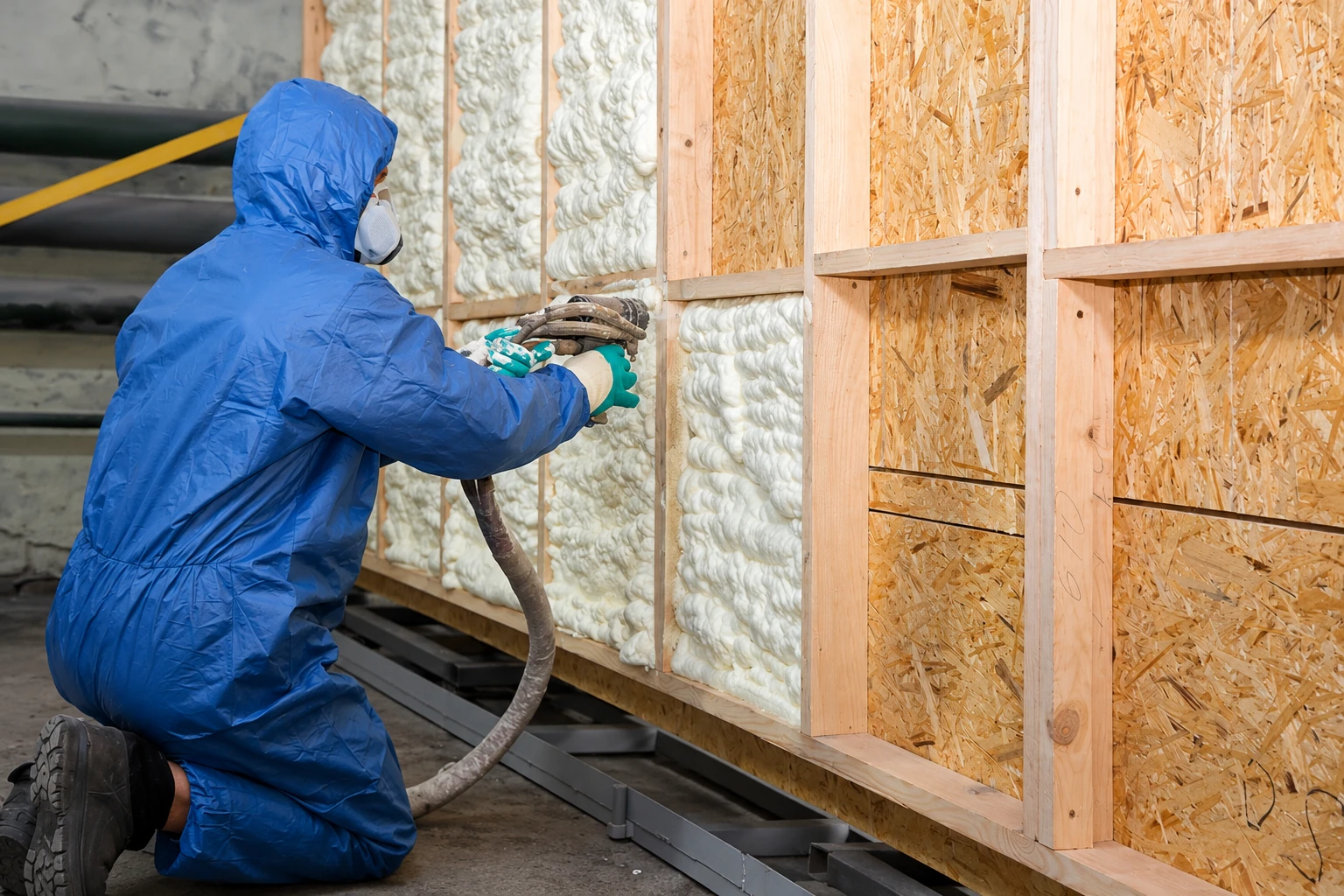
There's no fair number until someone sees the building, because the price comes from how much wall and roof area there is, whether it's framed or metal, and what material goes in. Old insulation that's wet or torn and has to come out first adds to it, and so does foam, which costs more than rolls or batts but seals air while it insulates. I'll give you a figure after I walk the building with you.
Get a plan for your building's insulation
Tell us the building type, which walls or roof you want insulated and whether it's a metal building. We respond within 1 business day to set up a free in-person estimate, with no pressure and no obligation.
Examples of commercial insulation
Moisture work that goes with it
Crawl space vapor barrier
If your building has a crawl space, sealing the ground down there stops damp air from rising into the floor above.
Learn moreVapor barrier installation
Some walls and roofs need a layer that slows moisture, and putting it on the correct side keeps the insulation dry for the long haul.
Learn more